
Books
Long-form studies that take the text seriously, work from the original languages, and are written so an ordinary reader can follow every step of the argument.
See the books →Reasoning Together is about reading Scripture carefully, speaking about it plainly, and inviting you to pull up a chair—whatever church you call home. Pour a cup of coffee. Open your Bible. Let’s reason together from the Scriptures.
Isaiah 1:18



Long-form studies that take the text seriously, work from the original languages, and are written so an ordinary reader can follow every step of the argument.
See the books →Unhurried conversations about the passages, the words and the debates behind them. No shouting, no slogans. Just people reasoning together.
Hear the podcast →Small live cohorts and self-paced courses that grow a reader’s confidence in Scripture, one book, one word study, one question at a time.
Join a class →“Come now, and let us reason together, saith the LORD: though your sins be as scarlet, they shall be as white as snow; though they be red like crimson, they shall be as wool.”Isaiah 1:18 · King James Version
The name comes from an invitation God himself extends. Reasoning together is not a debate to be won; it is a conversation God starts, and one he means to finish in mercy. It is also how a divided church learns to be one body again.
Books and classes are here now. Fellowships, live events and a circle of partner ministries are on the way. All of it exists for one purpose: to help you read Scripture carefully and reason together with other believers.
Long-form studies written from the original languages for ordinary readers. Four titles in the works.
See the books → Available nowSmall live cohorts and self-paced courses that build confidence in reading Scripture for yourself.
See the classes → Coming soonOnline gatherings where believers from different churches open the Bible together and talk it through, and live events throughout Canada and the United States.
Get notified → Coming soonMinistries, teachers and churches we work alongside, and whose work we are glad to point you toward.
Get notified →Each title starts with the text in its own language and ends with a reader who can see the argument for themselves.
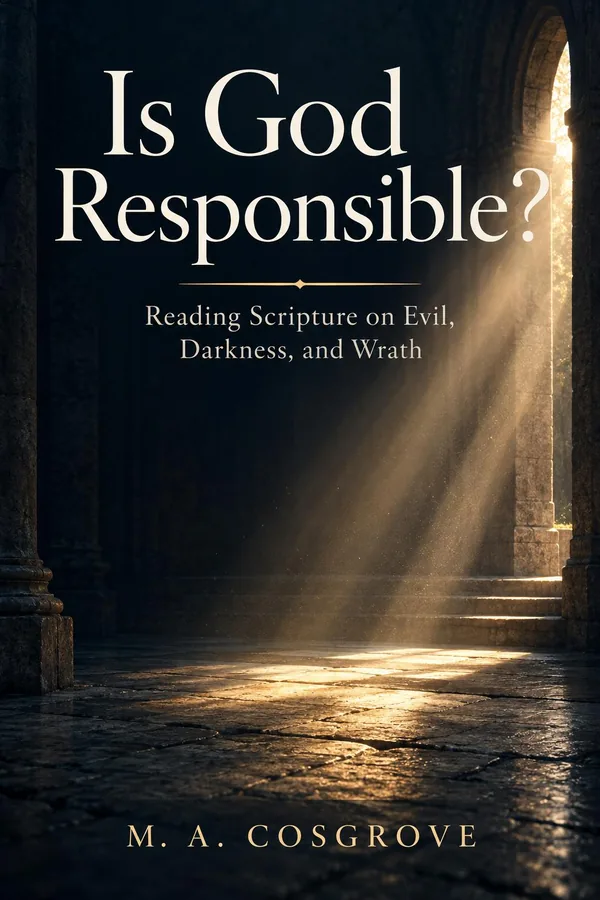
Reading Scripture on Evil, Darkness, and Wrath · by M. A. Cosgrove
There are passages in the Bible that can stop us in our tracks. We read about God’s goodness, then meet words that seem hard to reconcile with it. When suffering touches our lives, the question becomes harder to set aside: is God responsible?
This short study in four chapters gives that question a patient hearing. It begins with how the biblical writers speak about who acts, who permits, and who announces what will happen: metonymy, the Hebrew idiom of permission, and the habit of naming the sovereign cause while leaving secondary causes unstated. It then reads Isaiah 45:7 in its historical setting and asks why evil and darkness exist, before turning to faith, fear, and the experience of Job. No Hebrew is required; terms are explained, and footnotes identify the sources.
A standalone study, also incorporated in A Millennium Apart, where it helps situate biblical wrath within the larger treatment of Christ’s return, resurrection, and judgment.

The line Scripture draws and traditions that blur · by M. A. Cosgrove
A book-length study of the two distinct resurrections, the millennium of Revelation 20, and the line Scripture draws between them that later traditions have blurred. It moves past conflated traditions to assemble the sequential puzzle of biblical eschatology, works from the Greek text, weighs the major scholarly positions fairly, and is written for readers who want the reasoning, not just the conclusion.
Chapters are being finalized with the editorial team. Sign up below and we will tell you the moment it is available in print and digital editions.
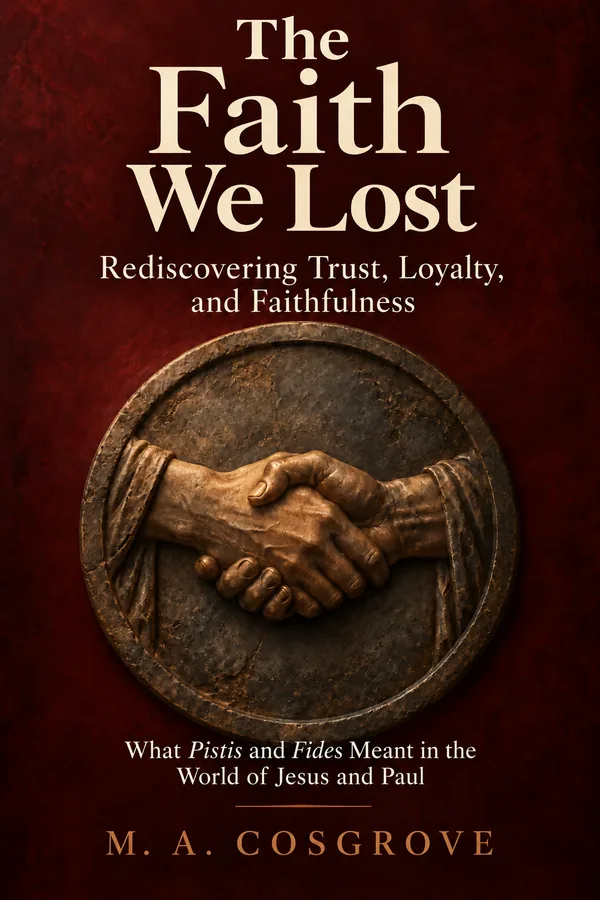
Rediscovering Trust, Loyalty, and Faithfulness · by M. A. Cosgrove
What did Jesus and Paul mean when they spoke of faith? In their world, pistis and fides were everyday words for trust, loyalty, and faithfulness: the bond between friends, patrons and clients, rulers and their people, a God and His people. Centuries of stained-glass tradition have narrowed that rich word to a private mental assent, and much of its meaning has been lost along the way.
This book goes back to the sources to recover what faith meant in the world of the New Testament: the Greek and Latin usage, the Hebrew background, and the passages where Jesus and Paul put the word to work. It clears away the misunderstandings that have obscured their meaning and invites readers to rediscover a faith that is relational, active, and faithful in both directions.
What pistis and fides meant in the world of Jesus and Paul.
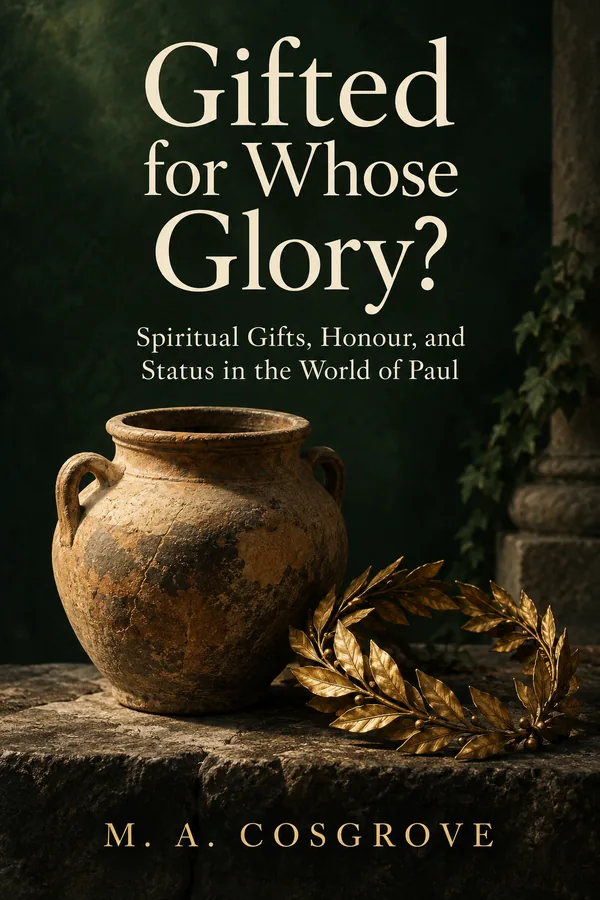
Spiritual Gifts, Honour, and Status in the World of Paul · by M. A. Cosgrove
The Corinthians were rich in the gifts and manifestations of the Spirit, and Paul says so. The trouble was what they did with them. In a Greco-Roman culture built on honour and shame, where status was won by display and rank was measured by the applause of others, spiritual gifts became one more way to rise above your neighbour. The church began rejoicing in itself instead of glorying in the Giver who had endowed it.
This book reads Paul's teaching on the gifts against that background. It looks at how honour, patronage, and public boasting shaped life in Corinth, why Paul kept returning to the body, the cross, and love, and what it means to hold treasure in a clay jar so that the glory belongs to God and not to us. Written for believers of every tradition who want the gifts of the Spirit without the pride that spoiled them in Corinth.
Spiritual gifts, honour, and status in the world of Paul.
A teaching podcast for people who like their Bible study with a second cup of coffee. Each episode takes one passage, one word or one question and works through it slowly enough that you can follow along with the text open.
New episodes are on the way. Subscribe now and they will land in your feed the day they release.
Classes are built for adults with a Bible and a busy week: clear readings, a live conversation, and no prerequisites beyond curiosity.
Live online cohorts on video, six to eight weeks, one evening per week (Eastern time), with recordings for anyone who has to miss a night.
A short passage and one or two supporting readings each week. Everything you need is provided; no textbook purchases required.
Priced at cost recovery, with fee waivers available. Nobody is turned away for lack of funds.
Lay readers, small-group leaders, and anyone who has wanted to read the Bible more carefully but never had a guide.
A six-week guided reading of the millennium passage and the texts it draws on, with a gentle introduction to the Greek vocabulary that shapes the debate.
Reasoning Together is a para-church ministry dedicated to serving the whole body of Christ, without respect to denominational affiliation. We are not a church, and we are not a replacement for one. We exist to serve the church, all of it, by publishing, teaching and talking about Scripture with care.
“Is Christ divided?”
1 Corinthians 1:13
The Apostle Paul asked that question of a church that had begun sorting itself into camps. We take it as our own. The people who read our books, listen to the podcast and sit in our classes come from many traditions; what they share is one Lord, one faith, one baptism. We keep to what Scripture says and leave the distinctives that divide Christians to the churches themselves. Where believers disagree, we would rather reason together and find common ground where possible.
The ministry was founded by M.A. Cosgrove, a pastor who, along with his wife, has shepherded a house church and a larger community of house churches for three decades. He has spoken at larger conferences and events, sharing the gospel. He is also a writer, and a lifelong student and teacher of biblical Greek. His books, Is God Responsible?, A Millennium Apart, The Faith We Lost, and Gifted for Whose Glory?, grew out of years of close reading in the text and the scholarship around it. The tree in our emblem grows out of an open Bible on purpose: everything we publish, record or teach is meant to be rooted there.
Our statement of faith is being finalized with the founding board and will be published on this page.
Books and classes are offered at cost. Everything else, from recording the podcast to keeping this site online, runs on the generosity of people who believe careful Bible teaching is worth supporting.
Reasoning Together has applied for registered charity status with the Canada Revenue Agency. Until registration is granted, gifts are gratefully received but are not eligible for official donation receipts.
One short email when something new is ready: an episode, a class opening, or the book’s release date. No more than that.
You are on the list. We will write when the first episode, a class opening, or a book release date is ready, and not before.